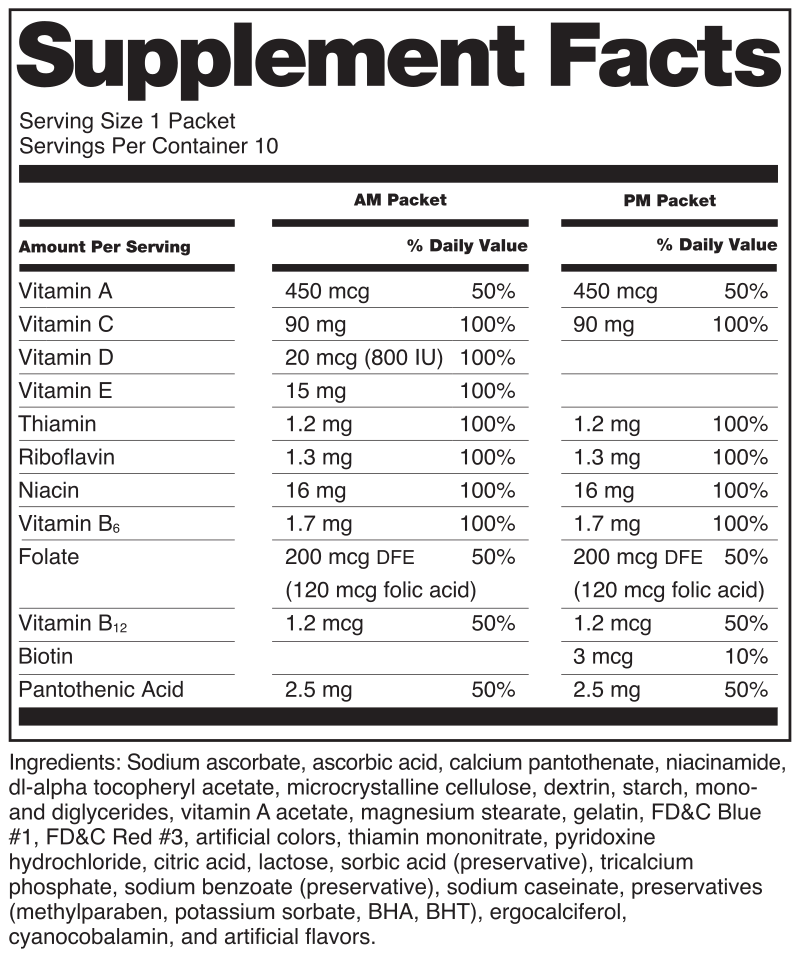
Dietary supplement labels can look precise while still leaving important questions unanswered. A Supplement Facts panel may list ingredients and amounts, but it does not automatically prove that a product is effective, appropriate, or risk-free. Reading a label well means combining the printed information with evidence about the ingredient, the person taking it, possible medication interactions, and the quality controls used by the manufacturer.
The U.S. Food and Drug Administration does not approve dietary supplements for safety and effectiveness before they reach the market. The National Institutes of Health Office of Dietary Supplements also emphasizes that supplements may help in specific situations but cannot replace the variety of foods in a healthy eating pattern.
A detailed label is useful, but it is not the same as independent proof that a supplement will deliver the claimed result.
Start with the product identity
The front of the package should identify the product as a dietary supplement or a specific type of supplement. Marketing language may be much larger than the actual identity statement, so look beyond words such as “advanced,” “clean,” “clinical,” “natural,” or “professional.” These terms may not tell you anything meaningful about evidence or quality.
| Front-label item | What it tells you | What it does not prove |
|---|---|---|
| Product name | How the manufacturer identifies the product | That the formula is unique or effective |
| “Dietary supplement” statement | The regulatory category | FDA approval |
| Serving count | Approximate number of labeled servings | How long the product should be used |
| Marketing claim | The benefit the company wants to emphasize | That strong clinical evidence supports the claim |
Highlighted note: A supplement is not “FDA approved” simply because it is sold legally or has a Supplement Facts panel.
Read serving size before reading ingredient amounts
Amounts in the Supplement Facts panel are usually listed per serving, not necessarily per capsule, tablet, scoop, or gummy. A bottle may advertise 500 milligrams on the front while the serving requires two or four units. This affects cost, convenience, and the total amount taken.
Questions to ask
- How many capsules, gummies, scoops, or drops make one serving?
- How many servings are in the container?
- Is the suggested serving different from the amount discussed with a clinician?
- Does the serving add substantial sugar, sodium, caffeine, or other active ingredients?
- Would taking multiple products duplicate the same nutrient?
Understand the ingredient line
The panel should list dietary ingredients and the amount per serving. Vitamins and minerals may also show a Percent Daily Value. Ingredients without an established Daily Value may show a symbol instead of a percentage. The absence of a Daily Value does not mean the ingredient is unimportant or unsafe; it means a Daily Value has not been established for labeling.
| Label term | Meaning | Common mistake |
|---|---|---|
| Amount per serving | Quantity in the labeled serving | Assuming it is the amount per capsule |
| % Daily Value | How the amount relates to an established daily reference | Treating 100% as a personal prescription |
| Source form | The chemical or food source of a nutrient | Assuming one form is always superior |
| Botanical part | Root, leaf, seed, bark, or other plant part | Ignoring that different parts may contain different compounds |
| Other ingredients | Fillers, binders, flavors, colors, coatings, and capsule materials | Skipping allergy or dietary-restriction checks |
Compare the labeled amount with the reason for taking it
A supplement can contain too little to match the amount studied, more than is needed, or a mixture that makes comparison difficult. The right amount depends on the nutrient, health status, diet, age, pregnancy, kidney or liver function, medications, and laboratory results.
Do not assume that more is better. Some nutrients accumulate, interact with medications, or cause adverse effects at high intakes. Iron, vitamin A, vitamin D, vitamin B6, niacin, selenium, and calcium are examples of nutrients where excessive use can matter.
Be cautious with proprietary blends
A proprietary blend lists a total blend weight and the ingredients in descending order by weight, but individual amounts may not be disclosed. This can make it difficult to know whether each ingredient is present at a meaningful amount or whether the total dose is safe when combined with other products.
| Transparent formula | Proprietary blend |
|---|---|
| Lists the amount of each active ingredient | May list only the total blend amount |
| Easier to compare with research | Difficult to compare with studied doses |
| Easier to identify duplication | May hide low amounts of expensive ingredients |
| Still requires evidence and safety review | Requires extra caution |
“Proprietary” describes how the formula is disclosed. It does not mean the blend is clinically superior.
Interpret label claims carefully
Supplement labels may use nutrient-content claims, health claims, or structure/function claims. A structure/function claim may say that an ingredient “supports” a normal body function. These claims are different from claims that a product treats, cures, or prevents disease.
Common claim patterns
- “Supports immune health”
- “Promotes relaxation”
- “Helps maintain healthy joints”
- “Supports normal energy metabolism”
- “Promotes digestive balance”
These phrases can be legally meaningful but broad. They do not tell you how large the benefit is, who benefits, how long it takes, or whether the claim is based on the exact finished product.
Look for the FDA disclaimer—but understand it
Many structure/function claims are accompanied by a disclaimer stating that the claim has not been evaluated by the FDA and that the product is not intended to diagnose, treat, cure, or prevent disease. The presence of this disclaimer does not prove that the product is poor quality. Its absence from a claim that requires it may be a warning sign.
Check for interactions and contraindications
Supplements can interact with prescription medicines, over-the-counter drugs, anesthesia, laboratory tests, and other supplements. “Natural” does not mean interaction-free.
| Situation | Why review matters |
|---|---|
| Blood-thinning medication | Some herbs and high-dose nutrients may affect bleeding risk |
| Diabetes medication | Some supplements may alter blood glucose |
| Blood-pressure medication | Ingredients may add to or oppose medication effects |
| Thyroid medication | Minerals and other products can affect absorption or testing |
| Surgery or procedures | Some products may affect bleeding, sedation, or anesthesia |
| Pregnancy or breastfeeding | Safety data may be limited and nutrient needs differ |
Safety note: Keep a complete list of supplements, medicines, doses, and frequency. Share it with physicians, pharmacists, dentists, and other relevant clinicians.
Evaluate quality signals without treating them as guarantees
Independent certification programs may test identity, strength, contaminants, or manufacturing standards. A recognized seal can add useful information, but it does not prove that the ingredient works for a particular purpose.
Useful quality questions
- Does the company provide a lot number and expiration or best-by date?
- Is there a reachable manufacturer or distributor?
- Does the company describe testing methods rather than only saying “lab tested”?
- Is an independent certification clearly identified and verifiable?
- Are the amounts of active ingredients disclosed?
- Are storage instructions realistic and clear?
- Does the product avoid disease-treatment promises?
Watch for red flags
- Claims to cure, reverse, or replace treatment for a serious disease
- Promises of immediate, guaranteed, or permanent results
- Before-and-after stories presented as scientific proof
- Statements that doctors or regulators are hiding the product
- Very long formulas with many ingredients but no individual amounts
- Products marketed for rapid weight loss, sexual enhancement, or bodybuilding with extreme claims
- Pressure to enroll in automatic shipments before reviewing the label
- No clear company identity or contact information
A step-by-step label review
- Confirm the product identity and form.
- Read the serving size and servings per container.
- List every active ingredient and amount.
- Check for duplicate nutrients across other products.
- Read the other-ingredients section for allergens and restrictions.
- Review the claim and determine what type of evidence would support it.
- Check NIH Office of Dietary Supplements fact sheets for ingredient information.
- Ask a pharmacist or clinician about interactions and appropriate use.
- Record the reason, dose, start date, and any effects.
- Stop and seek advice if concerning symptoms occur.
How to compare two products
| Comparison point | Product A | Product B |
|---|---|---|
| Active amount per serving | Record exact amount | Record exact amount |
| Units per serving | Capsules, scoops, or gummies | Capsules, scoops, or gummies |
| Servings per container | Calculate actual duration | Calculate actual duration |
| Cost per serving | Total price divided by servings | Total price divided by servings |
| Ingredient transparency | Individual amounts or blend | Individual amounts or blend |
| Independent testing | Verify certification | Verify certification |
Track whether a supplement is helping
Without a clear reason and outcome, supplements can continue indefinitely without anyone knowing whether they provide value. Define the purpose before starting. The outcome might be correction of a documented deficiency, improvement in a symptom under clinical supervision, or support during a life stage with established needs.
- Record the product, dose, and start date.
- Avoid starting several new products at once.
- Use objective measures when appropriate, such as clinician-ordered laboratory testing.
- Set a review date.
- Report suspected serious adverse events and seek medical care when needed.
A supplement should have a clear purpose, a safety review, and a point at which its value is reassessed.
Bottom line
Reading a supplement label requires more than checking the front of the bottle. Start with serving size, active amounts, ingredient forms, other ingredients, claims, interaction risks, and product transparency. Then compare the label with reliable evidence and personal medical context.
Supplements can be useful in specific situations, but they are not automatically safe because they are natural or available without a prescription. A pharmacist, registered dietitian, or other qualified clinician can help determine whether a product is appropriate.